No Regrets: Fulfilling Unfulfilled Ambitions

Hands up if you wanted to be a vet when you grew up. Seems that vet ambitions are pretty common for young girls. I’ve long since let go of that dream (I pass out at the sight of blood), but still hang onto another dream I’ve had since I was 8.

Like many other 70s kids in Canada I carried an iconic orange box with me as I made my rounds at Halloween. My hopes started with an orange coin collection box, and blossomed into a full blown youth obsession to one day work for “the UN”.

As a 12 year old, my ideas of what “the UN” actually did were somewhat naive but in my heart I imagined myself doing important work and traveling the world. 

Fast forward to today. I’m on study trip to New York during the United Nations General Assembly. It’s honestly all I can do to contain myself and not have a full-on freakout on my seatmates!

But getting here wasn’t a straight line to the finish. This is not the typical culmination of my career. In fact, this trip is the braiding together of various parts of myself: my career, my community service and my philanthropy. 

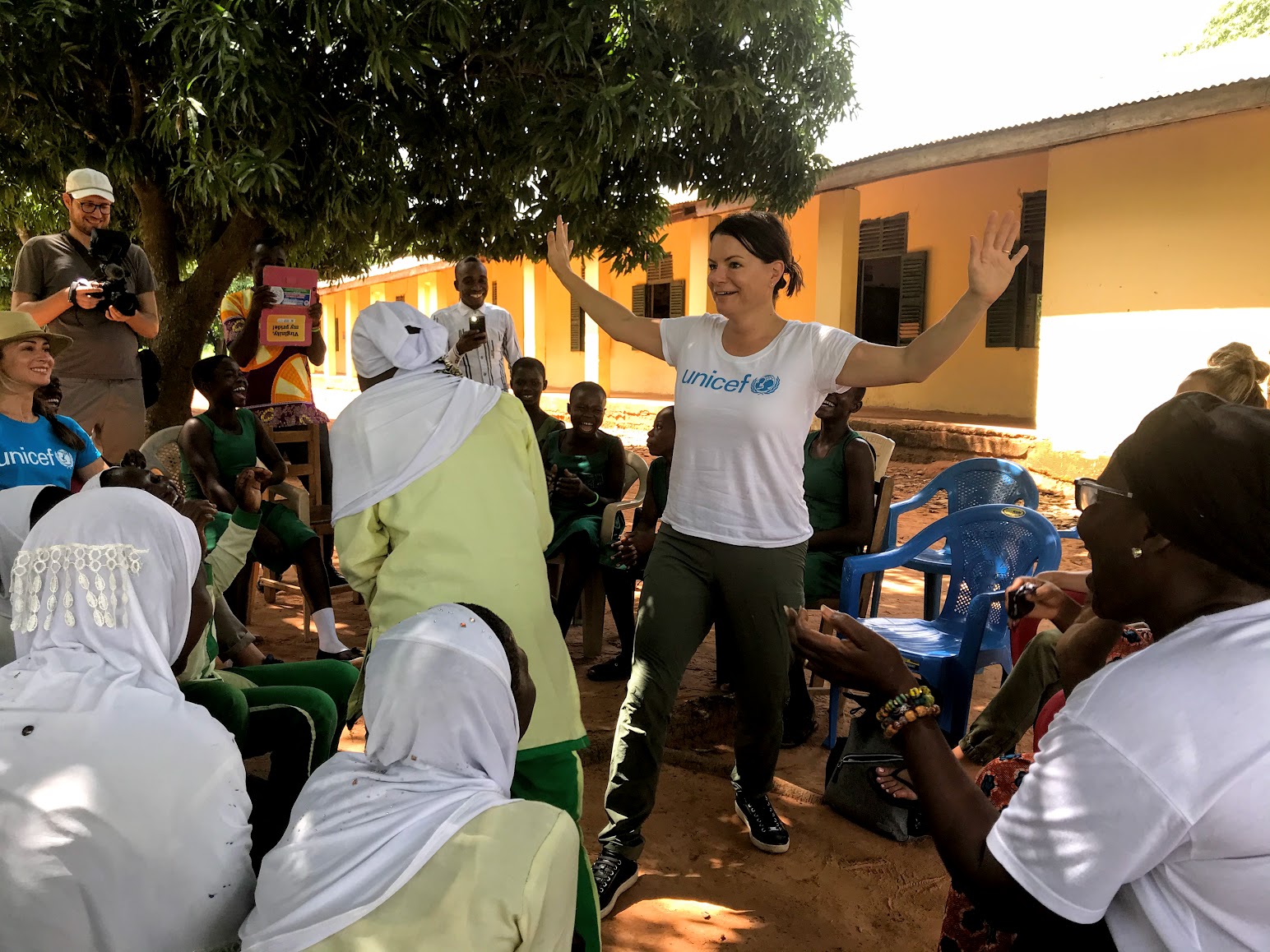
What started as an orange box at the age of 8, grew into a coveted consulting contract with Unicef in my 20s. It eventually blossomed into a multi-year commitment to join Unicef’s national leadership program, Women Unlimited, which took me to Ghana in 2019.

So here we are! On a plane. On a study trip during the UN General Assembly.

I wanted to use this moment to explore the idea of unfulfilled ambitions. Why did it take me so long? What got in the way? Is it too late for my other ambitions? So I sat down with professional coach and dear friend Susan Elford. As someone who is a big booster of power-women pursuing big ambitions, Susan is a great person to help put unfulfilled ambitions into context. 

Me: How do you define unfulfilled ambitions?

Susan: To me, unfulfilled ambitions are those dreams you have in the back of your mind that you put aside to pursue other things. Many of my clients have unfulfilled ambitions that they don’t even know they have. They know there is something more for them, but don’t quite know what that is. Interestingly, many people have what I like to call a “Secret Life Project”.

Me: How do these unfulfilled ambitions show up in your practice?

Susan: Women come to me mid to senior in their careers feeling there’s something more for them. They have dreams they’ve put on hold; things they don’t think are possible; opportunities not (yet) pursued. And they are unsatisfied. They’re not ready to complete their career until they do “one more big thing” or they’d like a nice semi-retirement project. Unfulfilled ambitions show up in my Personal Leadership Coaching practice every single day. SO many women say, “I’m not done!” and fear giving voice to their unfilled ambitions.

Me: What are some of the underlying barriers to fulfilling our ambitions?

Susan: Two words: limiting beliefs. People feel they don’t have the confidence, the wherewithal, the money, the courage the…fill in the blank. They are afraid to risk their current life situation and are afraid they won’t make enough money if they pursue “the thing.” They worry what people will think if they pursue “the thing.” Or can I even do “the thing.”

Me: As a coach how do you address these ambitions with your clients?

Susan: There are so many ways I like to tackle this with my clients. The first step is to uncover the ambition. Once it’s out there, and voice has been given to it, it’s more real somehow. Self-reflection, self-discovery, and building self-confidence are all behind this. What’s getting in the way are often deep-rooted beliefs about themselves. The more we can uncover what those beliefs are, the more we can shift them because truly, it’s a mindset. And mindsets can be shifted.

Me: Not everyone has the opportunity to engage a coach. What advice would you have for those wanting to revisit an unfulfilled ambition?

Susan: Ask yourself what your childhood dreams were. What did you always imagine you would do, be or have? Like you with your orange Unicef box on Halloween, you imagined working for the UN. Why did that ambition get hidden? It clearly didn’t go away, it just got hidden underneath a pile of stuff. Have an interview with your dreamer self then ask yourself, is this something you still want to pursue?

So there you have it. I’m on a plane, leveling-up my learning and work with Unicef. What will you do today to pursue your unfulfilled ambition?


How can bad grants happen: a theory

It’s the most wonderful time of the year! The fall funding binge, be it grants or loans being cut, is an exciting time of promise…whether a biofuel scale-up, youth mental health charity or, as was the case this week, an affordable First Nations housing project. 

It’s also a time when some ask, “Why that project?”

Scandals can add to the angst. Case in point: the recent federal grant to an organization to build an anti-racism strategy for Canadian broadcasting. Turns out the consultant that was hired to run the project has a history of racist tweets. Oh dear.

In my recent letter published in the Globe and Mail (Aug 29) I assured readers that there are no shortage of hoops that organizations need to jump through to secure the coveted pot of gold. Since that letter, as a grantor, angel investor and fundraiser myself, I’ve been asked to expand on that, and provide my theory for how bad grants occasionally happen.

For starters there are three best-practice steps when raising money for a start-up or non-profit:

  1. Get clear on what we are doing and what we need. All good fundraising starts with a plan and an all-in budget.
  2. Do the homework. Research prospects and make friends. It’s been proven that funders give to people, not organizations.
  3. Be thorough when making the ask. Most applications or proposals require the proponent to supply the basics on the initiative, critical path, anticipated outcomes, detailed budgets, but also mountains of governance info, audited financials, board materials, and biographies on key personnel.

It’s rigorous for a reason: both funders and proponents need to know what they’re getting themselves into. 

But it only works if the rigour is followed on both sides. Funding arrangements can go awry for various reasons:

  1. The proponent wasn’t truthful or thorough. For example, zest to get the money can sometimes compel proponents to be overly conservative when budgeting.
  2. The grantor didn’t follow the process, either fast-tracking a politically-charged project through the system… or just not reviewing the material to the level of detail needed.
  3. The initiative changed mid-way. This happens, but requires the proponent to inform the grantor.

In summary, really, there’s no excuse for bad funding. Mistakes can happen, but political miscalculations or cutting corners in the vetting process needs to stop. If it’s not your money, grant or loan it like it is.

Is our mental health the after-shock?

I was talking with a friend today and her tone was markedly different. The upbeat person I know was replaced by someone who was brimming with anger. 

For her, the anger was targeted at the closure of the national parks. It was the final straw, on top of so much rapid change to life, work, home.  

But what if it was more than that?

Now, full disclosure, I’m no therapist. But after I sat on it for a few hours, I wondered whether she was grieving.

It got me thinking about the seismic shift in our world in the last two weeks. All of a sudden our range of choices has been limited to an ever-shortening list that we’re not accustomed to. 

I realize this post may set off a tirade of shaming; we’re so fortunate to live in a democracy with public health care and a social safety net. Let me assure you, I’m well aware that there are great concerns on the hierarchy of needs at the moment. 

But mental health also requires our attention. A column today in the Globe and Mail by the CEO of the Canadian Mental Health Association put this issue on the front-burner. Post-pandemic, mental health issues could be the after-shock we are equally unprepared for. Another great Globe and Mail piece by Robyn Urback highlighted the connection between “economic peril” and mental health.

I don’t have tips to offer. All I ask is that we give ourselves plenty of grace as we adjust and perhaps grieve the interim loss of social connections and the routines that give balance to our lives. 

But this I know for sure: we all need to move through these dramatic changes. By listening and talking with others perhaps we can find yet more common ground in our experience of grief, worry and disappointment.

There has never been a better time to pick up the phone and call a friend, family or neighbour.

Found your short-shortlist yet?

I have a confession. OK, here goes… My professional and personal life was smoke-and-mirrors. What I project likely gives the impression of an orderly life, a career full of intention, surrounded by loads of family fun. 

It’s a lot of smoke-and-mirrors. It was easy to keep the trickery going, with a busy, busy, busy work and social life. 

But when you strip away the trickery of a busy life, as we are now in this Covid19 era, what is left is the real-real. 

I don’t know about you, but I’m finding that with each passing week, my shortlist is getting shorter.

What I’d deemed important a month ago has vanished into the detritus of my inbox. I may get to it later or I may decide to delete, delete, delete. 

In Arianna Huffington’s Weekly Thoughts Newsletter she writes, “We have all now been forced to pause. And during this pause, we are discovering that certain parts of life were not as essential as we thought — and just as important, rediscovering certain essential parts we had forgotten.”

What’s made your short-shortlist? And what is in the virtual trashcan?

I’ve also heard from many of you that your inner circle has also gotten smaller. When we’re all told to stay home, it’s curious to observe who we’ve called, texted or Zoomed. It’s even more curious to observe who’s called, texted or Zoomed us. 

I have always valued authentic connections over dozens of transactions. But now with the haze over LA and the smoke and mirrors of my life cleared, I can see who’s still there. 

Has your inner circle “table of 12” become a more intimate dinner for 8, 6 or even 4?

For sure there may be come grieving that comes along with the clarity we now have. Be angry for a bit. Be sad. 

But know that on the other side is a gorgeous short-shortlist that can give us more focus, a clearer sense of purpose and (gasp!) more time to pursue the wish list items. Even for a pandemic-schooling-working-mom-strategic-consultant, I’m writing and reading more. Who knew?

That said, there is no Instagram filter that will make the art-project-math-work-yesterday’s-dishes dining table tableau of my life look pretty. But really? Who cares.

Non-Profits in Times of Crisis

In times of dramatic change or crisis, the stakes are particularly high for non-profits. 

There is much that separates the work of non-profits from business, and these distinctions need to inform how we respond in times of dramatic change or crisis.

According to ViTreo, a Calgary-based fundraising consultancy, non-profit organizations are uniquely vulnerable. Most operate with tight margins and are dependent on fundraising and the generosity and support of donors. Not all have reserves or a strong balance sheet to fall back on. 

A recent CCN article went so far as to declare the pandemic may mean the extinction of many charities. Government funding has been redirected, corporation donations have all but dried up and philanthropists are seeing a dramatic change to their personal and financial position.  

Even as non-profits, from the Banff Centre for Arts and Creativity to TELUS Spark to The Grand YYC are forced to layoff program personnel they are attempting to retain fundraising and marketing staff. Now is not the time to take your foot off the fundraising gas pedal. (And if you are, or can be, a donor now is the time to reach out and find out where your favourite charities are hurting the most.)

Additionally, non-profits exist deeply in community and in many ways, are granted a “social license” by the communities they serve. For example, a shelter for vulnerable populations can only operate because it has earned the trust of those experiencing homelessness, the trust of funders and the trust of governments under which they operate their program. If the shelter fails to operate in accordance with expectations, that trust can take years to rebuild.

I used the word “expectations” because non-profits are often held to a standard well above baseline. The challenge of unpacking stakeholder expectations combined with financial urgency, creates a particular pinch-point for non-profits during the COVID-19 pandemic.

Non-profits must go beyond pandemic response. They must respond in a way that aligns to their values.

The recent disclosure of L’Arche founder Jean Vanier’s sexual assault against women provides a strong case for a values-first response. The organization deeply values the mutual relationship between those they serve and the organization itself. Their response was spin-free and highly empathetic to the people they serve. There was no greater example of this mutuality than a CBC national radio program featuring a client alongside a L’Arche volunteer. It was the first time I’d heard a person with intellectual disabilities on a national radio program.

For non-profits facing crisis:

  1. Lead with the facts, be proactive and honest about the impact on your organization and your stakeholders.
  2. Underpin your strategy with your values; what you hold to be true. How can your approach mirror the values you hire for, deliver programs with, and live by every day?
  3. Start at the heart of your organization: the stakeholder group of greatest consequence to your Mission. For L’Arche, that was their staff and volunteers living in community with clients. Listen and be prepared to adapt your response accordingly.

These are vulnerable times, but we can counter that vulnerability by grounding back down into our core values and the people we serve. That unrelenting focus will see our organizations emerge stronger, with a stronger grasp on our core purpose.

For non-profits struggling to develop their response and stakeholder communications, COVID-19 Communications is here to help with rapid pandemic planning, stakeholder mapping, communications planning and training. All delivered remotely, meeting our clients when and where they are. Our team is largely suspending their regular day-to-day business operations to support as many entrepreneurs as we can through this crisis. Please reach out.

Weinstein verdict = work + power

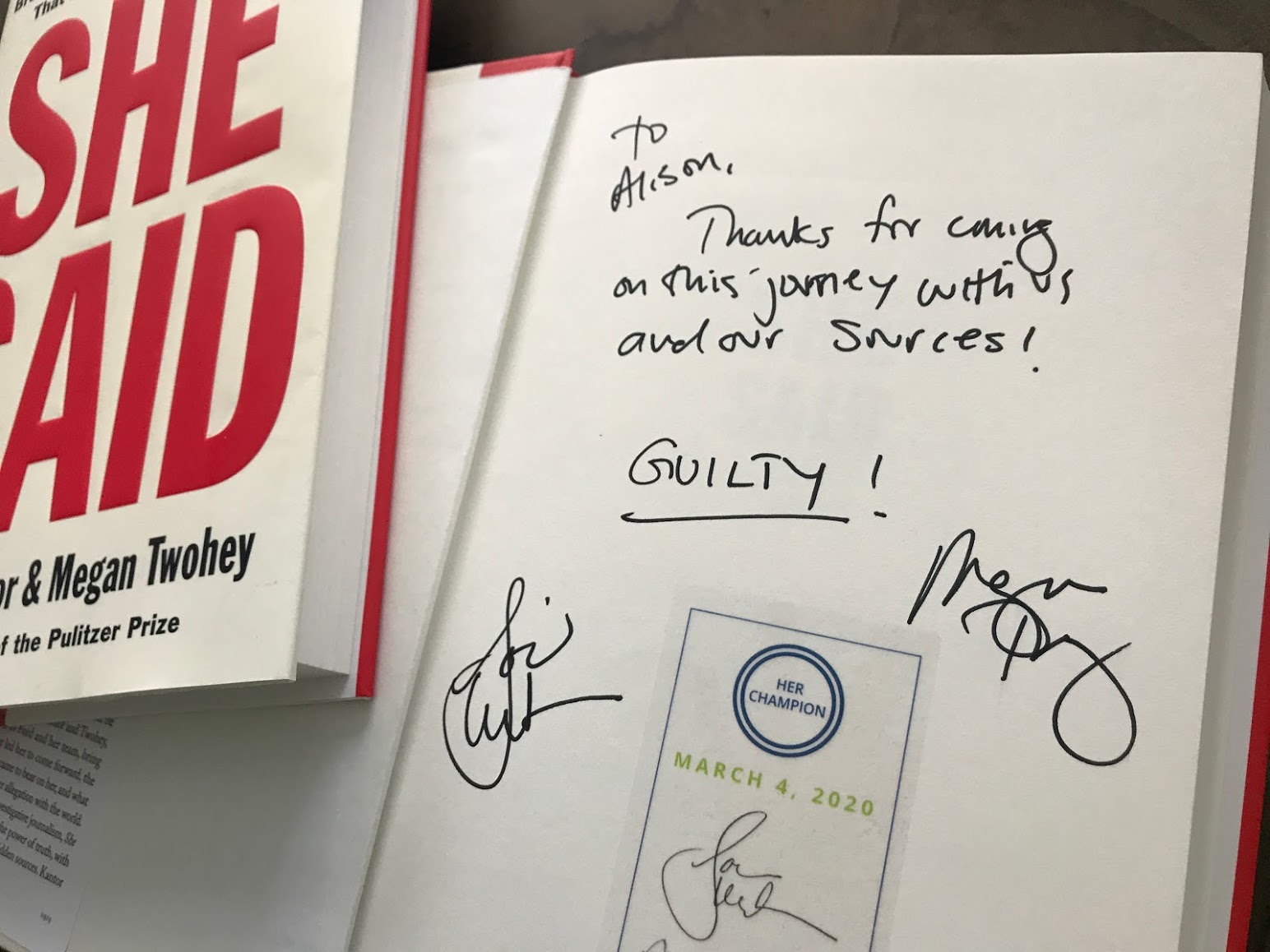
Harvey Weinstein is guilty. We can now add his guilt to what seems to be an ever-growing pile of bad behaviour coming from the shadows across our country. At a YW Calgary lunch on Wednesday with @JodiKantor and @MeganTwohey, authors of the Weinstein expose titled She Said, Jodi reminded us, “This is not about sex, it’s about work and power.”

It’s about every workplace.

And yet with all the hand-wringing about diversity and inclusion, Calgary ranks 23rd out of 25 of Canada’s largest cities to be a working woman. According to the study by the Canadian Centre for Policy Alternatives women earn 65 per cent of what men earn in Calgary.

Nationally, there’s still a lot of work to do. Years of McKinsey & Company studies show we will be paid less, promoted less and more likely to experience some form of micro-aggression at work. From their 2019 report:

  • At the VP level, women are 5 times more likely than men to need to prove their competency and 3 times more likely to hear demeaning remarks made about themselves.
  • Women at the senior manager/director level and above are 2.5 times more likely than men to be the only person of their gender in a room at work.
  • So what lever needs to be pulled in order to shift this culture?

According to Jodi, we need to look at who is narrating our culture in the first place. In the case of America, she said, for 100 years the (male) titans of Hollywood narrated the culture of America. Their stories became the American story and narrated the American dream. Stories of war heroes, corporate heroes and even romantic heroes, all told through the lens of Hollywood men.

I asked Jodi and Megan what the women in the room (at the Ranchmen’s Club of all places) could take from their experience “outing” Weinstein, into our day-to-day efforts in Calgary workplaces.

Jodi’s answer: Consider who is narrating your culture.

For example, recently an Alberta company published a decal showing an illustration of a 17-year old female activist in what looks like a violent sex act. They went so far as to include their company logo. What does it say about our culture that a company can be so blatant about its behaviours and face no recrimination?

So today, please sit for a moment and ask yourself, who is narrating our culture? Who is narrating the culture of your organization? Do the people charged with narrating your culture represent your employee base, your customer and your community? If not, there’s a good chance your culture is lost in translation.

I Have Covid. Why the Shame?

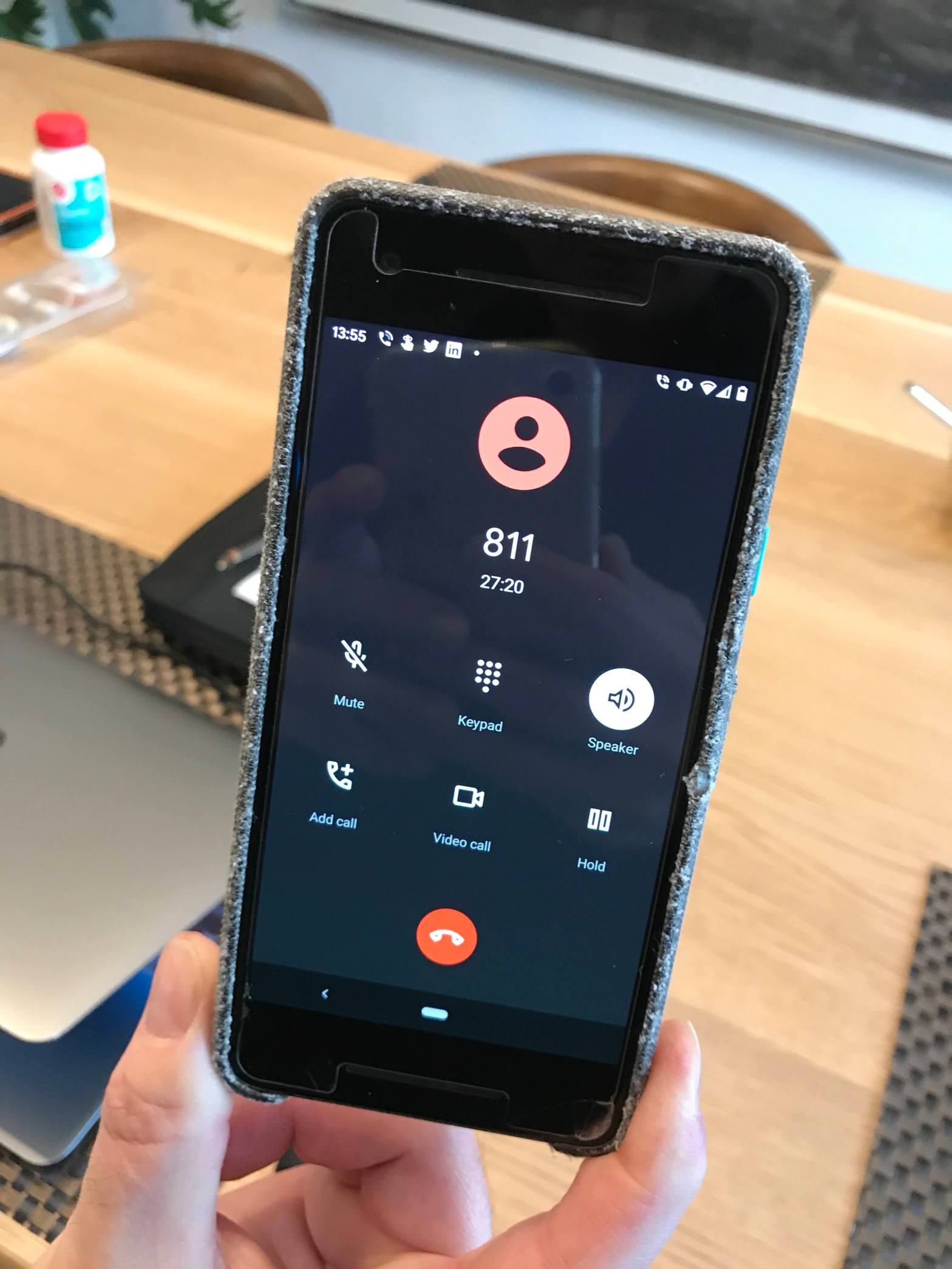
My entire household tested positive for Covid this week. The diagnoses came like a slow-moving take-down of a house of cards. One by one, the POSITIVE texts arrived from Alberta Health Services (AHS). And since then I’ve been baffled by my embarrassment.

It was the first feeling I expressed to my husband. I didn’t say “afraid”. Or “worried”. I said, “I’m so embarrassed.” We hadn’t even brushed our teeth yet and I was already expressing a feeling that is generally foreign to me, a middle-aged woman who lives her work and life as though she has nothing to lose. All of a sudden I felt shame.

We have become obsessed with privacy during this pandemic. As though privacy is an option with a pandemic that is not choosy in its host. We quietly get our diagnosis and, until this month, AHS would quietly collect our contacts and discreetly inform them that “someone” in close contact has Covid. 

Well those days are over. Our province is so overwhelmed with Covid that contact tracing is backlogged and we’ve been asked to make those calls ourselves. To “out” ourselves.

As our results trickled in over three days I said it about two dozen times, “We have Covid”. It was no small feat sending text after text, in the haze of fever and aches, without the pleasure of smelling my morning coffee or, really, smelling anything at all. 

But if my texts had a voice, that voice would have been barely above a whisper. And the responses, though almost entirely kind and sympathetic, had an air of hushed mystery. 

No!! What?!? How? When??

Now before the Covid-shamers get all hot-and-bothered, we followed every rule to the letter. No house parties, no travel, and even no extracurriculars for the kids. (OK except Brownies but it was held by flashlight, in masks, outside, in the dark.) Since day one we adopted mask-wearing with a sense of duty, hand washing became a source of pride and comfort, and we managed to make endless days at home together fun or at least tolerable.

And that’s the issue. It’s not my shame. It’s the shame being passed around as fast as Covid can spread, by people I’ll likely never meet, anonymous people that just don’t get it. I remember during the early lockdown, being shamed on social media for something as benign as a dog-walk with another family in our bubble. The Covid shaming started then. 

Shame is a funny thing. It’s a slippery downward spiral that starts with guilt. For me it was the mom guilt I felt when I told my daughter she is positive. Her sweet little face looking up at me, with no idea what this really meant. How could I have let this happen to her? We still don’t know what the long-term effect of Covid will be on this girl who is just getting her life rolling.

But for her, the first instinct was to grab her iPad and text her friends. There was no shame. Her texts were not whispers, but yells. For her this was just some new, unusual experience, not a pandemic that has affected millions.

I look back on the early days of Covid. The virus was “over there”. It was so easy to dismiss until the first case arrived in the US. Then all of a sudden it took on a Canadian face, and started its way across the country. But I could still be a little smug that we were doing everything right, and could control the outcome for my family. Not so.

To my community: I have Covid. This disease can infect someone like me. A mom of two young school kids, who works from home as a non-profit executive consultant, co-chairs her kids’ school council, walks her dog daily and gets groceries with a mask. It’s not a disease of “someone” who attended some clandestine, underground cocktail party. Or went into a Costco without a mask.

Perhaps after eight months of pandemic in Canada, there’s still so much secrecy and shame. It’s easier to believe that Covid happens to reckless people, to marginalized people, to people in crowded spaces or with preexisting conditions. If we limit the spread in our minds to the “others”, we can just go about our day, with our mask on, and hand sanitizer in the centre console of our car. 

Unfortunately that’s not the case. Covid can happen to all people, somewhat equally. And treating it with such secrecy will only perpetuate the spread. Instead we need to open up the conversation, push through the embarrassment, share our stories and perhaps risk having a Covid-shamer bite back. 

For me, what started with a single text ballooned into a jam-packed inbox of questions and conversation. It’s like my own little public health communications system and maybe somehow I’m making a small difference. It’s been therapeutic too. As I shared and shared, my voice got louder with every text and phone call, until my voice drowned out the shame.

When companies go all-in

There I was, with five other Canadian women leaders wandering the northern Ghana city of Tamale thinking, “Ahhh look how far we’ve come.”

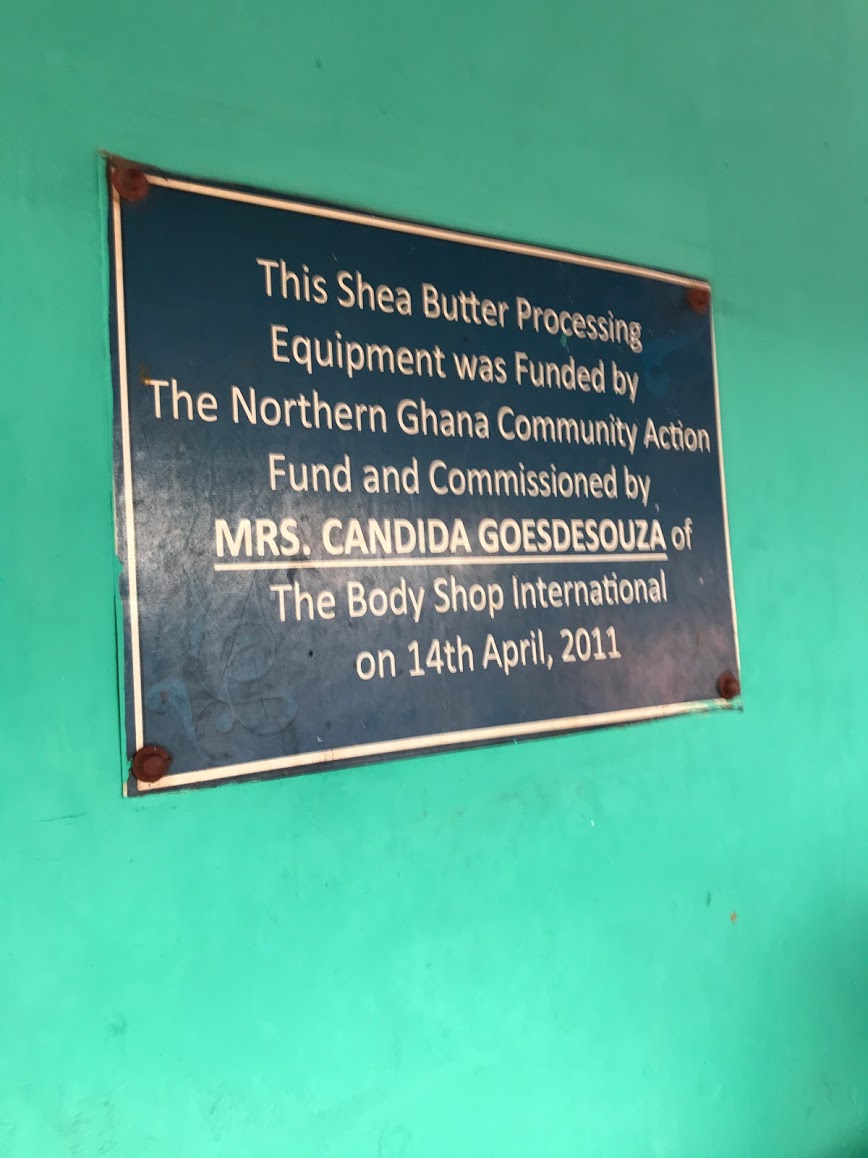
And then we bump right into UK brand The Body Shop. Not a storefront, but a facility built by The Body Shop, to make and supply shea butter for their beauty products. In a part of Ghana that most travelers will never see.

I was struck by two things:

  1. The facility was staffed entirely by women. And some of them had their children with them while they worked. How many Canadian workplaces are so enlightened? These women were making money and engaging in economy in a tangible way.
  2. We thought we were off the grid. No cell service, nothing recognizable from home, and then, “Hello Body Shop”. Wait. What? This company went far. They went deep into a remote part of Ghana to secure their supply while also creating economic opportunity for women. To create change you can’t just dip your toe in the pond. You have to go all in.

I’m sure The Body Shop hasn’t got it right every time but progress can’t happen when you’re too afraid of calculated risks.

Want to lead? Get uncomfortable

What happens when you drop six women leaders in rural northern Ghana?

I know because I was one of them. We were part of a new program to connect Canada’s philanthropic women leaders with the women and girls impacted by Unicef Canada’s programs. It was only six days but in that brief time I know this for sure:

  1. Women philanthropists are powerful when we speak up and invest in the things we decide are important. We have the power to influence policies and programs for the people who need it most.
  2. While infrastructure is needed (homes, clinics, schools), shifting norms is also important and is the “long game”. We need to invest in programs and organizations that are up for this difficult task if we are to move the needle.
  3. And finally, leadership. I grew (and I know others did too) as leaders through the experience. We were well outside our comfort zone and visited communities you’d be hard-pressed to find on a map. It can be too easy to slip into comfortable in Canada. What happens when you disrupt that completely? You discover reserves of compassion, clarity and strength you didn’t know you had. And who wouldn’t want more compassion, clarity and strength as a leader?